Showing posts with label pigeon control. Show all posts

Tuesday, October 22, 2013

Sonic Bird Control Solves Subway Station Pigeon Problem

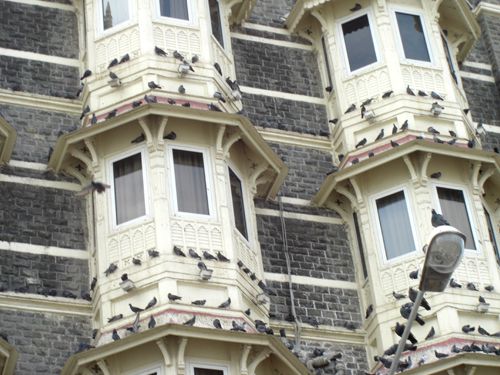
keep birds awayThe Toronto’s Bathurst Subway Station was once home to dozens of annoying pigeons. Attracted by the scent of freshly baked goods inside, and by customers who couldn’t resist feeding them crumbs and snacks, the birds would leave droppings everywhere, including on peoples’ hats and parkas. The bird droppings not only had the potential for carrying any of 60 known diseases, but also created dangerous slip-and-fall hazards inside the station. The good news is that the pigeons have left the station, thanks to a sonic bird control device that keeps them outside on telephone poles and trees.

Using Sound to Deter Birds

The device used to successfully get rid of pigeons is known as the Bird Chase Super Sonic made by a U.S.-based company called Bird-B-Gone. An ideal all-in-one bird deterrent, the device broadcasts pre-recorded distress and predator calls of over 22 species of birds, including pigeons, crows, gulls, starlings, woodpeckers and grackles. It can be set to deter a specific bird or switched to its "general" setting to deter multiple bird species. This way, it effectively protects any venue from today’s most common bird problems. The distress and predator calls are repeated every ten minutes to keep birds away. And the device can be programmed to turn on or off at night. There’s also a volume control that allows the sound output to be adjusted—anywhere from 65-105 decibels.

Exploiting a Bird’s Natural Abilities and Fears

Birds may have small brains but they have an acute instinct to avoid even the slightest threat. The Solar Bird Chase Super Sonic fully exploits a bird’s natural alertness and sensitive hearing. A bird’s hearing range is similar to a human’s, which is why most ultrasonic bird deterrents are ineffective, since they produce sounds above a bird’s hearing range. In addition, the sounds emitted by the Solar Bird Chase Super Sonic resemble normal birdcalls to the human ear, so they won’t bother pets or people.
scare birds awayDesigned to Deter Pest Birds from Large Spaces

Scientifically designed to deter birds from large spaces, the Solar Bird Chase Super Sonic is the ideal pest bird deterrent for large commercial and municipal areas. It’s ruggedly designed for outdoor use and constructed of UV-protected materials to ensure a long life outdoors. It’s a bird control solution that’s both effective and humane.

Solar Powered and Sustainable

The Solar Bird Chase Super Sonic is now available in a solar powered model. It’s more efficient during daylight and features rechargeable batteries for convenient nighttime operation. A handy LCD panel displays operating status and settings at a glance. The device comes with one internal speaker that easily covers up to an acre of property. To ensure customer satisfaction, the Solar Bird Chase Super Sonic comes with a 30-day money back guarantee if unsatisfied with results. The device also comes with a 1-year manufacturers warranty on parts.

For additional advice on how to protect commercial and municipal properties from pest birds, consult an expert like the folks at Bird-B-Gone, Inc.

Friday, September 27, 2013

Top 4 Bird Control Devices for Hotels


If you own or operate a hotel, you know that image is key to your success. One problem many hotels have to deal with is the presence of pest birds. If your hotel is in a seaside or resort setting, pest birds can become a costly nuisance.

The problems associated with pest birds are many. For one, they leave unsightly, unhealthy droppings on signage, walkways, outdoor cabanas, tables and chairs. This can be a real turn off to guests. Bird droppings can also create slip-and-fall hazards that may injure guests. And they can carry viruses and other airborne diseases--as many as 60.  Sparrows and feral pigeons, for example, can carry bacteria causing salmonella. Finally, bird droppings create offensive odors, which can turn away potential guests and compel those already booked to leave.

The solution to the bird problem is professional bird control in the form of proven effective bird deterrents that keep birds away from your hotel and grounds. Here are four bird-proofing strategies the experts recommend:

1. Bird Spikes

Used by hotels around the world, Bird Spikes are ideal for deterring pigeons, gulls, crows, geese and other large birds. Birds simply can't land on or near these spikes. Bird Spikes come in tough, rigid unbreakable polycarbonate or flexible stainless steel. The best bird spikes are made of marine-grade stainless steel with a UV-protected polycarbonate base that can be bent to fit curved surfaces. The poly spikes come in a variety of colors--like crystal clear, brick red, light grey, brown, black and tan—to blend in with your hotel’s color scheme.

2. Electric Tracks

Ideal for keeping birds off signs, ledges, rooftops and other elevated areas, Electric Bird Shock Tracks are easy to install and use. Birds that land on these electrified tracks are quickly “educated” with a harmless but annoying electric shock. The best electric tracks have a low-profile design that renders them virtually invisible. These electric tracks feature a flow-through design that keeps water from damming up on rooftops. They also have a corrosion-resistant track that resists alkali and acidic environments.

3. Bird Spiders

Easy to place and move wherever pest birds like to gather--like open patios, rooftops, awnings, and even on patio tables before you open--Bird Spiders provide a visual distraction that frightens and annoys birds. The long, spider-like arms wave in the breeze, making birds feel ill at ease and eager to leave. Bird spiders come in a variety of diameters (2’, 4’, 6’ and 8’) to provide increasingly wider areas of bird deterrence.

4. Bird Chase Super Sonic

Ideal for keeping pest birds away from patio areas, gardens, pools and spas, the Bird Chase Super Sonic emits bird distress and predator calls that frighten birds away. The sounds resemble normal birdcalls and won’t annoy guests. The device emits distress and predator calls for 22 different species of birds.

Tuesday, July 19, 2011

Bird Control for Military Installations

Birdnettingstealth

by Alex A. Kecskes

The Army Corp of Engineers recently built a new Defense Distribution Depot at Pearl Harbor. The building was designed to store a variety of materials and goods the military needs for various operations in the area.
 
Recognizing that other military airplane hangars and warehouses had pigeon problems, the Army decided to be proactive when it came to pigeon control. They knew that the traditional cross-beam structures used in hangars and warehouses presented an attraction to pigeons looking for a place to roost and nest. To circumvent a costly pigeon problem, the Army included bird barriers in the form of pigeon and bird control netting in its design of the new depot. Netting effectively blocks birds from the entire area, forcing them to find other areas to perch, roost and nest.

Pigeon control netting was installed across the entire ceiling of the new warehouse, which excluded pigeons from the support beams. The 3/4" mesh netting was supported by a cabling system, and care had to be taken to ensure that the netting was correctly tensioned. Improperly tensioned netting would have left gaps large enough for pigeons to squeeze through. Boom lifts were used to properly install the netting so it wouldn’t rip or tear. Bird net zippers were installed in the horizontal bird net surface to allow maintenance crews access to lighting fixtures.

One of the most effective pigeon control products available, bird netting comes in various sizes to exclude different bird species. The 3/4-inch mesh size excludes everything from pigeons to sparrows. Better bird netting consists of twisted and knotted polyethylene twine designed to last 10 years or more. Netting now comes in various colors, making it nearly invisible from ground level.

Once installed, the new Defense Distribution Depot was protected from the nuisance and expense of pigeons. The high tech equipment and supplies in this warehouse would not be vulnerable to the damaging effects of pigeon droppings. 

There are hundreds of military bases across the U.S. Each can fall victim to the damage and defacement caused by pest birds. The uric acid in bird droppings can damage electronics, machinery, engine parts, weapons and explosives. Damage to these things can be very expensive, something today’s tight military budgets can ill afford.

Unless effective bird proofing measures are implemented, military buildings, depots and structures will be vulnerable to pest bird infestations. Pest birds can also create fire hazards with their accumulation of nesting materials and feathers—these combine to make excellent kindling.  Bird droppings carry diseases that can impact a military installation’s manpower readiness.  Cleaning up dried bird droppings can be expensive, since cautions must be taken in the form of PPE (Personal Protective Equipment). Last but not least are the slip-and-fall hazards bird droppings create on warehouse floors and air hangars.

In addition, to bird netting, there are a number of other bird proofing devices that can be used to repel pest birds from military installations. Just as popular as bird netting are Bird Spikes. Used to keep pest birds away from the White House, bird spikes prevent birds from landing on or near them. Harmless to birds and installation crews, bird spikes come in strong, rigid unbreakable polycarbonate or flexible stainless steel. They are easy to install on most any surface using nails, screws or glue. For really large birds like seagulls, cormorants, turkey vultures and raptors, there’s the Mega Spike, which features 7-inch spikes of marine-grade stainless steel. To keep pest birds out of rain gutters and spouts, consider using the Gutter Spike. It’s specially designed to keep pigeons and other large birds out of these commonly infested areas.
Enhanced by Zemanta

Wednesday, February 23, 2011

Bird Guards…from Low-Tech to High-Tech

by Alex A. Kecskes
Pest birds can be loud, annoying, destructive, even hazardous to one's health and well-being.
But thanks to modern technology, man has come up with a number of ingenious ways to discourage these fine-feathered pests from landing, roosting and nesting on valued property. These bird guards run the gamut from low-tech flashy banners to high-tech ultrasonic systems that annoy pest birds almost as much as they annoy us.
Among the most elementary and economical is the Bird Scare deterrent. These reflective banners and balloons are usually made of metal foil or shiny tape and are animated by even the gentlest breeze. Some balloons have large predator eyes. And all work on the principle of creating an “Optical Distraction Zone.” Aside from being fairly inexpensive, these scare-eye diverters can be easily affixed to almost any point or surface pest birds tend to land. Bird scare products are perfect for boats, patios, pool areas, overhangs, gazebos, and other open areas, even vineyards and orchards.
An ever-popular bird guard for use against pigeons and large birds is the Bird Spike. These come in strips of menacing-looking spikes that effectively keep pest birds from landing. You can choose steel spiked strips or rigid unbreakable polycarbonate spikes (the plastic bird spikes are less expensive). Ideal for use on rooftops, signs and other elevated areas, they're easy to install and won't harm birds.
For awnings, boat or patio covers, and other flat surfaces, you can't go wrong with the Bird Spider. These have spider arms that wave in the breeze. To a pest bird, the arms look like tentacles that are about to grab them, so birds avoid them. Spiders come in a number of diameters to discourage various bird sizes. Best of all, they're maintenance free and harmless to birds.
If you've ever tried to run on ice, you know the feeling a best bird gets with this bird guard. Made of angled PVC panels, Bird Slopes just won't allow birds to land--their little legs slip and slide right off. Bird slopes are perfect for eaves, ledges, beams and other 90-degree corners where pest birds like to nest.
Another bird guard that works a bird's legs is Bird Gel. You apply it with a caulking gun, and when the gel dries, it skins over, leaving a sticky membrane that birds can't stand. Not to worry, it’s safe for birds (except swallows). Bird gels are ideal for a wide range of surfaces, including conduit, pipes, ledges, I-beams and parapet walls.
If you've got a large area to protect--like a warehouse, airplane hangar, big courtyard, or rooftop, Bird Netting makes an ideal bird guard. Mesh openings vary to deter various sizes of pest birds, including sparrows, starlings, pigeons, seagulls and other large birds. Opt for netting that's flame resistant, U.V. stabilized, and rot and waterproof. For most applications, choose non-conductive netting.
Our next bird guard depends on electrical conductivity to discourage pest birds from landing. Called Electric Track Bird Repellents, these deliver a mild electric shock that’s irritating yet harmless to birds. Ideal for pigeons, seagulls and larger birds, the electric tracks are easily mounted on signs, ledges, rooftops, and flat or curved surfaces. Opt for tracks with a flow-through design to keep water from damming up on rooftops.
Another high-tech bird guard uses sounds to discourage pest birds from landing and nesting. Called Audio Bird Repellents, they emit ultrasonic sounds that mimic a bird's predator or distress calls. These are ideal for parking garages and overhangs. Whether you've got problems with pigeons, sparrows, starlings, or seagulls, these ultrasonics will keep them away.
Enhanced by Zemanta